
Strength After 50: Why Functional Fitness is the Secret to Living Well

Updated: Dec 19, 2025

Turning 50 doesn't mean your strength has to decline. Functional fitness focuses on exercises that improve your ability to perform everyday activities like climbing stairs, carrying shopping bags, and getting up from a chair while building real-world strength that keeps you independent and active. This approach to training differs from traditional gym workouts because it trains your body for the movements you actually do in daily life.
Your muscles naturally lose mass as you age, but the right exercises can reverse this process. The combination of strength training and functional movements helps rebuild lost muscle whilst improving your balance and reducing fall risks. You'll discover why functional fitness works so well after 50 and learn the specific exercises that deliver the best results for building strength and stability at any fitness level.
Why Functional Fitness Matters for Strength After 50

Functional strength training focuses on movements that mirror everyday activities, which becomes increasingly important as natural muscle loss accelerates. This approach offers distinct advantages over isolated exercises by building strength that directly supports your independence and quality of life.
Understanding Functional Strength Versus Traditional Training
Traditional strength training typically isolates specific muscle groups through single-joint movements. You might perform bicep curls or leg extensions that target one area at a time.
Functional resistance training takes a different approach. It uses multi-joint, multi-planar exercises that engage multiple muscle groups simultaneously. These movements replicate real-world actions like standing from a chair, lifting shopping bags, or reaching overhead.
Research shows both methods build muscle strength and mass effectively. However, functional fitness training offers unique benefits for movement quality. Studies found that whilst both groups gained similar strength, only functional training participants improved their movement scores. Traditional training participants actually experienced declining movement quality over time.
Key differences include:
Traditional training focuses on isolated muscles
Functional strength emphasises coordinated movement patterns
Functional exercises engage stabilising muscles and core
Movements transfer directly to daily tasks
The Role of Muscle Loss and Sarcopenia
Sarcopenia describes the age-related loss of muscle mass and strength that typically begins around age 40. This process affects your ability to perform everyday activities and maintain an active lifestyle.
Strength declines by 1 to 2% annually after age 50, whilst muscle mass decreases by approximately 1.5% each year. These changes happen gradually but compound over time.
Muscle loss impacts more than appearance. Weaker muscles make climbing stairs harder. Getting up from low chairs becomes challenging. Carrying groceries feels more difficult.
Functional fitness directly addresses sarcopenia by building strength through movement patterns you use daily. This training style helps preserve muscle mass whilst improving coordination and balance. Regular functional strength training can slow or reverse age-related decline, keeping your muscles engaged in ways that matter for your lifestyle.
Maintaining Independence and Quality of Life
Your ability to live independently relies heavily on functional capacity. This means performing essential activities without assistance or difficulty.
Research demonstrates that functional fitness leads to better balance, improved cognitive function, and enhanced quality of life, particularly for older adults. Active older adults show significantly better health outcomes than inactive peers.
Independence means different things at different life stages. After 50, it often means confidently handling tasks like gardening, playing with grandchildren, or travelling without physical limitations.
Functional training reduces lower back pain and improves health-related quality of life according to recent studies. Participants reported decreased disability alongside improvements in balance and muscular strength. These changes directly support your ability to maintain an active lifestyle and complete everyday activities with confidence rather than fear of injury or exhaustion.
Essential Functional Exercises for Building Strength and Stability
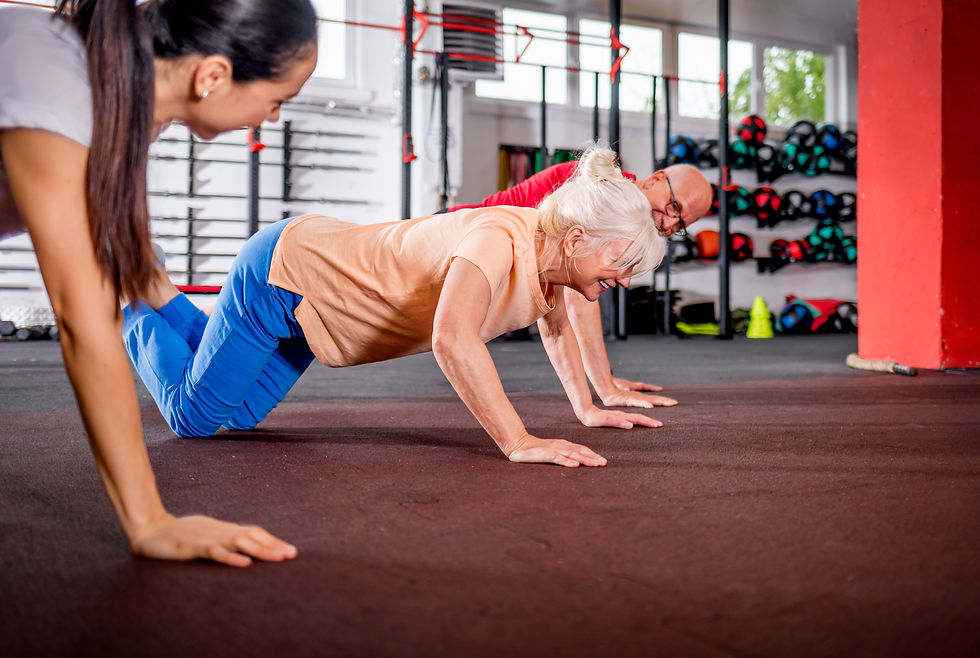
Building real-world strength requires exercises that mirror daily movements like sitting, standing, pushing, and lifting. These movements strengthen multiple muscle groups at once while improving balance and coordination for everyday tasks.
Bodyweight Squats and Leg Strength
Bodyweight squats are one of the most important exercises you can do after 50. You use squatting movements every day when you sit in a chair, get out of bed, or use the toilet.
Squats build strength in your legs and glutes whilst maintaining the mobility needed for these daily movements. They also help improve bone density in your hips and legs. When you perform squats regularly, you're training your body to handle real-world activities with confidence.
Start with feet shoulder-width apart and lower yourself as if sitting in a chair. Keep your chest up and your weight in your heels. You don't need to go all the way down at first. Even partial squats build strength.
Lunges work similar muscle groups but add a balance challenge. Walking lunges target your glutes, quads, and calf muscles whilst improving coordination. Step-ups onto a low platform or stair provide another excellent option for building leg strength and practising the movement pattern you use on stairs every day.
Standing calf raise exercises strengthen your lower legs and help with balance. Simply rise up onto your toes whilst holding onto a wall for support.
Push-Ups and Upper-Body Power
Push-ups build upper-body strength in your chest, shoulders, and arms. This strength helps you push yourself up from the floor if you fall, which can be critical for preventing falls from becoming serious injuries.
You don't need to start with full push-ups. Wall push-ups or counter push-ups work just as well for building strength. Place your hands on a wall or kitchen counter and perform the pushing movement. As you get stronger, move to a lower surface.
Regular pushups also strengthen your core since you must keep your body straight during the movement. This makes them a true functional training exercise that works multiple areas at once.
The overhead press builds strength for reaching and lifting objects above your head. This movement pattern helps with tasks like putting dishes in high cupboards or storing items on shelves. Start with light weights or resistance bands and focus on proper form.
Bent-over rows strengthen your back muscles and improve posture. Strong back muscles help you maintain good posture throughout the day and can reduce lower back pain.
Core Strength: Planks, Glute Bridges, and Stability Movements
Core strength forms the foundation of all functional movement. Your core includes your abs, obliques, and lower back muscles that work together to support your spine and transfer power between your upper and lower body.
Planks are excellent for building core stability without complicated movements. Hold yourself up on your forearms and toes (or knees) whilst keeping your body straight. Start with 10-15 seconds and gradually increase your time. Planks strengthen your entire core including your lower back.
Glute bridge exercises target your glutes and lower back whilst being gentle on your joints. Lie on your back with knees bent and feet flat. Lift your hips up until your body forms a straight line from shoulders to knees. This movement helps with getting up from lying down and protects your lower back during daily activities.
Bird-dog exercises improve core stability and balance at the same time. Start on hands and knees, then extend one arm and the opposite leg. This challenges your core to keep you stable.
A fitness journal helps track your progress with these exercises. Write down how many repetitions you complete and how the exercises feel.
Improving Balance, Coordination, and Joint Mobility
Balance and coordination decline naturally with age, but you can maintain and even improve these abilities through practise. Better balance means you're less likely to fall and more confident moving through your day.
Single-leg stands are simple but effective. Stand on one foot for 30 seconds whilst holding onto a chair for support. As your balance improves, use less support. This exercise directly translates to activities like putting on trousers or stepping over obstacles.
Farmers carries improve your grip strength, balance, and joint stability all at once. Simply walk whilst carrying weights in your hands. This mimics carrying shopping bags or luggage.
Tai chi movements and gentle yoga poses enhance both mobility and balance. These activities keep your joints moving through their full range of motion whilst building the small stabilising muscles around each joint.
Resistance bands add variety to your functional training routine. They're gentle on joints whilst still building strength. Use them for exercises like lateral band walks that strengthen the muscles around your hips and improve joint stability.
Working with a workout buddy makes exercises more enjoyable and keeps you accountable. You can spot each other during exercises and encourage proper form.
Dynamic stretches before exercise and static stretches afterwards maintain joint mobility. Hip circles, arm swings, and ankle rolls prepare your body for movement and keep your joints healthy for daily activities.
Enjoy the benefits of staying active and strong with wonderful low impact Zumba Gold classes, and strengthening functional Lift & Laugh sessions, Book a class today to discover how you can build strength, boost confidence, and move with ease supported by expert guidance every step of the way.


Comments